Why Tree-Trimming Timing Matters
Tree pruning is more than cutting branches for appearance. Proper pruning can help manage deadwood, improve clearance, address structural concerns, and maintain a tree's natural form.
Timing matters because trees respond differently depending on the season and their growth cycle. Pruning during an appropriate window can make it easier to see branch structure and may reduce unnecessary stress on the tree.
Greenville homeowners also have to consider our regional weather. Heavy thunderstorms, high winds, and periods of severe weather can expose weak or damaged branches that may need attention regardless of the season.
Greenville Tree-Trimming Calendar
The following calendar provides general guidance for homeowners in Greenville and the surrounding Upstate. The best timing for an individual tree may vary.
| Season | General Guidance | What to Watch For |
|---|---|---|
| Winter | Often a favorable period for routine pruning of many dormant deciduous trees. | Deadwood, crossing limbs, structural problems, and branches over roofs or driveways. |
| Early Spring | Can be suitable for many trees before active leaf growth begins. | Avoid unnecessary pruning of trees that are about to produce spring flowers. |
| Late Spring | Often a better window for pruning spring-flowering trees after flowers fade. | Storm damage, broken branches, and excessive low growth. |
| Summer | Selective corrective pruning may be appropriate depending on the tree and purpose. | Heavy limbs, damaged branches, clearance problems, and storm-related defects. |
| Fall | Often better for inspection and planning than aggressive routine pruning. | Deadwood, weak branches, and potential hazards before winter weather. |
| Any Season | Hazardous or damaged branches may require prompt professional attention. | Hanging limbs, split branches, storm damage, or branches threatening property. |
Winter: A Good Time for Many Greenville Trees
Late winter is commonly one of the most useful times to prune many deciduous trees because the canopy is easier to evaluate after leaves have dropped.
With the tree's structure visible, it can be easier to identify crossing branches, deadwood, weak branch unions, and limbs that may be growing toward roofs, driveways, or other structures.
Easier Inspection
Leafless canopies can make branch structure and defects easier to identify.
Dormant Season Work
Many deciduous trees are commonly pruned while dormant before spring growth begins.
Spring: Pay Attention to Flowering Trees
Spring pruning requires a little more planning because some of the most recognizable trees in Upstate South Carolina produce flowers on growth that developed during the previous season.
Flowering dogwoods are a good example. If you prune them heavily before they bloom, you may remove flower buds that would otherwise produce the spring display. For that reason, spring-flowering trees are generally better pruned after flowering.
Have a Dogwood?
Flowering dogwoods are common throughout South Carolina. Routine pruning is generally best kept to a minimum and performed after flowering when necessary.
Summer: Focus on Necessary and Corrective Work
Summer does not automatically mean tree trimming has to stop. Selective pruning may still be useful when branches are broken, hanging, rubbing, blocking access, or creating a clearance concern.
Summer is also when severe thunderstorms can expose structural weaknesses that were not obvious earlier in the year.
If a storm has damaged a tree, visit our emergency tree service page to learn more about situations that may require faster attention.
Fall: Inspect Trees Before Winter
Fall can be a useful time to inspect mature trees and identify potential problems before winter.
Look for dead branches, cracked limbs, hanging branches, large limbs extending toward structures, and changes in the tree's overall shape or stability.
Routine aggressive pruning is not always necessary just because leaves are beginning to fall. The type of tree and reason for pruning should determine the timing.
Best Time to Trim Common Upstate South Carolina Trees
Greenville properties contain a wide variety of tree species. The following examples show why one pruning schedule does not work for every tree.
Oak Trees
Mature oaks can develop large, heavy limbs and broad crowns. Routine structural work is often easiest to evaluate during the dormant season when branch architecture is more visible.
Large oak branches can also create substantial risk when they extend over homes, vehicles, patios, or driveways. Damaged or hazardous limbs should be assessed when the problem is discovered.
Dogwood Trees
Flowering dogwoods are spring bloomers. Routine pruning should generally be kept limited and, when pruning is needed, performed after flowering rather than immediately before bloom.
Crape Myrtles
Crape myrtles flower on new growth and can generally be pruned during winter or early spring before new growth begins.
Heavy topping is usually unnecessary. Proper pruning should focus on maintaining the natural structure, removing unwanted growth, and addressing branches that are crossing, rubbing, or creating clearance problems.
Maples and Other Shade Trees
Many deciduous shade trees can benefit from dormant season inspection and selective pruning. Tree age, branch structure, site conditions, and the goal of the work should guide the actual pruning plan.
Pine and Evergreen Trees
Evergreen trees have different growth habits than deciduous shade trees. They should not automatically be pruned according to the same schedule or technique.
If a pine has large dead limbs, storm damage, a broken top, or significant structural concerns, it is better to have the condition evaluated than to wait for a particular month.
Need Professional Tree Trimming?
Carson Tree Company provides professional tree trimming and pruning services throughout Greenville, Simpsonville, and surrounding Upstate South Carolina communities.
Explore Our Tree Trimming ServiceWhen You Shouldn't Wait for the Ideal Season
Seasonal timing matters for routine pruning, but safety problems take priority. A damaged limb does not become safer simply because it is the wrong month for normal pruning.
- Large branches are broken or hanging after a storm.
- A limb has developed a visible crack or split.
- Dead branches are positioned over a house, driveway, sidewalk, or parking area.
- Branches are interfering with safe access around your property.
- A recent storm has significantly changed the shape or stability of the tree.
If the entire tree appears unstable or severely damaged rather than simply needing pruning, read our guide on when a tree may need to be removed.
Tree Trimming vs. Tree Pruning
Homeowners often use the terms trimming and pruning interchangeably, but professional pruning typically refers to selective branch removal for structure, health, safety, and clearance.
Trimming may also refer to controlling growth or improving appearance. The important question is not what the service is called, but which branches should be removed and why.
If you are also comparing project costs, see our detailed guide on tree trimming costs in Greenville, SC.
Signs Your Trees May Need Professional Trimming
- Dead or broken branches are visible in the canopy.
- Branches are rubbing or crossing each other.
- Limbs are extending over your roof or driveway.
- Low branches are interfering with vehicles, sidewalks, or landscaping.
- The canopy contains excessive deadwood.
- Storm damage has left cracked or hanging limbs.
Can You Trim Trees Yourself?
Small, accessible branches may sometimes be manageable for homeowners with appropriate tools and knowledge. Large-tree pruning is very different.
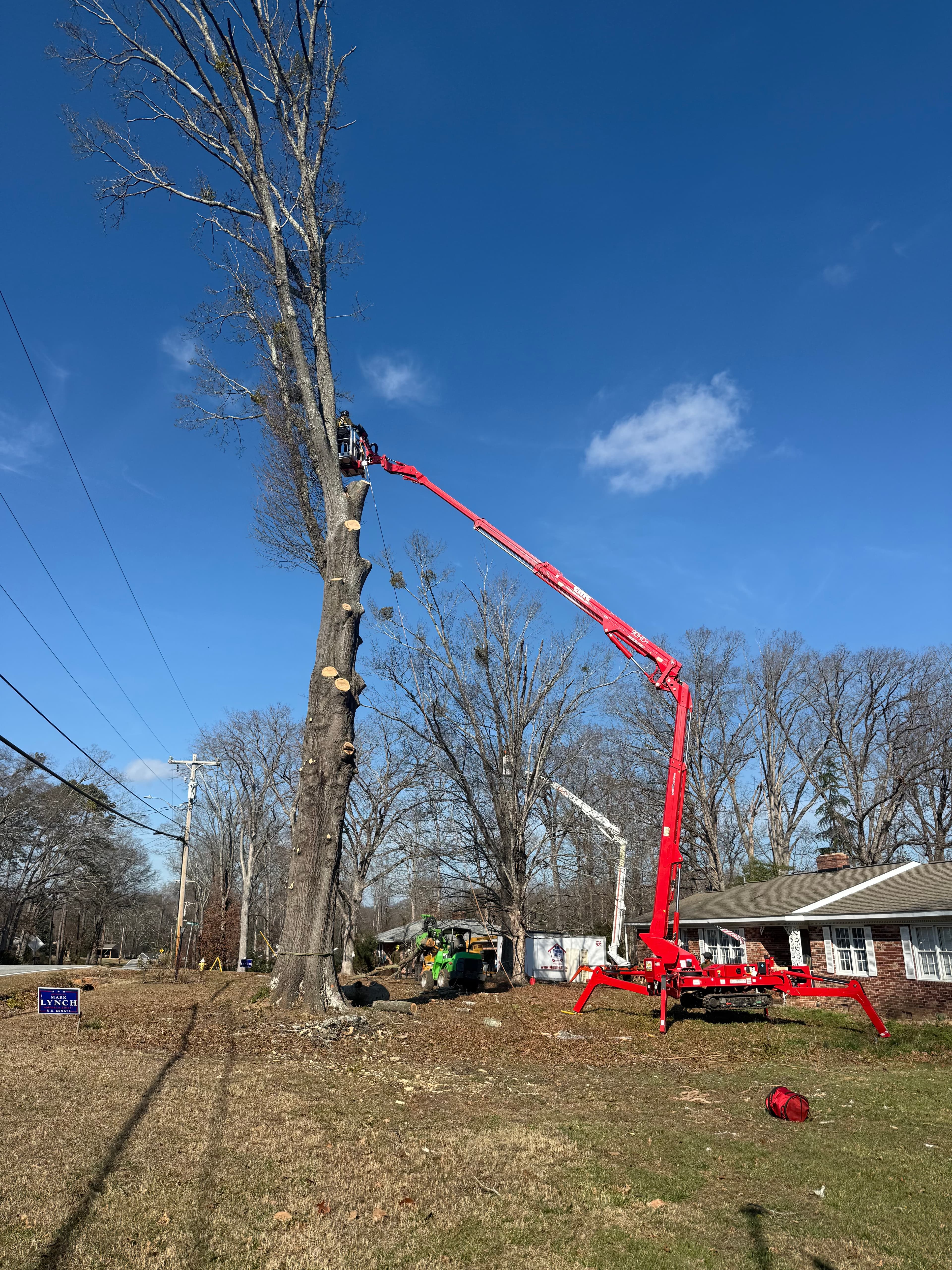
Branches high in the canopy, heavy limbs, trees close to buildings, and work requiring climbing or aerial equipment can create significant hazards.
Be Careful Around Utility Lines
Tree work near overhead utility lines requires additional precautions. Do not attempt to cut branches that are contacting or dangerously close to electrical lines.
How Tree Trimming Can Help Before Storm Season
Greenville and the surrounding Upstate experience thunderstorms, high winds, and occasional severe weather that can place additional stress on mature trees.
Proper pruning cannot make a tree storm-proof, but identifying dead, damaged, poorly attached, or problematic limbs before severe weather may reduce avoidable hazards around the property.
Homeowners with mature trees near houses, garages, fences, pools, or driveways may benefit from having those trees inspected before problems become urgent.
How Often Should Trees Be Trimmed in Greenville?
There is no universal trimming schedule for every property. Some young trees may need structural pruning as they develop, while mature trees may need periodic maintenance based on their condition and location.
Factors that affect trimming frequency include:
- Tree species and growth rate.
- Tree age and overall structure.
- Distance from homes and other structures.
- Exposure to storms and high winds.
- Previous pruning and maintenance.
- Development of dead, broken, or interfering limbs.
Frequently Asked Questions
What is the best time to trim trees in Greenville, SC?
For many trees, late winter through early spring before new leaves emerge can be a good time for routine pruning. However, the ideal timing depends on the species, condition, and reason for pruning.
Can trees be trimmed in the summer?
Yes. Selective trimming may be appropriate in summer, particularly when branches are damaged, broken, hazardous, or causing clearance problems.
When should dogwood trees be pruned?
Flowering dogwoods are generally pruned after flowering. Pruning immediately before bloom can remove flower buds.
When should crape myrtles be pruned?
Crape myrtles can generally be pruned during winter or early spring before new growth begins. Heavy topping is typically unnecessary.
Should storm-damaged branches wait until winter?
No. Broken, hanging, or hazardous branches may require prompt attention regardless of the season.
How often should trees be trimmed?
Tree species, age, growth rate, location, structure, previous pruning, and storm exposure all influence how often trimming may be appropriate.
Get a Professional Tree Assessment
Every tree and property is different. Carson Tree Company can evaluate your trees, identify branches that need attention, and recommend the appropriate timing and type of pruning.